
Tribal Bellydance Costuming 101
Thursday, July 3, 2014


The Tribal Code
Tuesday, November 22, 2011

* Written/Created by the lovely and talented ladies of FatChanceBellyDance:
Commitment: Be there for your dance sisters. Whether it’s making sure your cues are strong or getting to a gig on time, we all need to depend on one another.
Communication: Ask questions and learn from the more experienced dancers and teachers. Also, don’t let things fester. Express yourself in a constructive, respectful way.
Awareness: Be aware of how your words or actions can affect others. What makes sense to you may be understood differently by someone else. Take considerations to think before you speak or act.
Teflon: Don’t take things personally! There are too many unique individuals in this group to avoid minor misunderstandings. Let things slide off your ego – don’t let things stick!
Humility: We all can benefit from going to Level 1 and Level 2 classes and working on technique. We can also benefit from allowing room for all our personalities to exist.
Trust: This dance form is founded on trust, on and off the dance floor. Earn people’s trust and give yours as well.
Respect: Treat your fellow dancers (and human beings) with compassionate respect and be mindful of others’ talents and limitations. Respect the dance form for what it is rather than how you would change it.
Support: Come to the shows of FatChanceBellyDance (and Deep Roots Dance!) and of your fellow dancers. Not only does it support the dancers, it is a great way to learn about performance!
Joy: Dance for the love of it! Enjoy yourself and the company of others.
Article: Tribal Fusion Bellydance on Gilded Serpent
Thursday, November 11, 2010
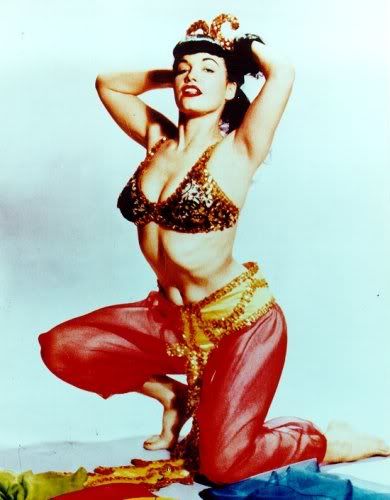
http://www.gildedserpent.com/cms/2010/11/03/jasmine-june-intro-tribal-fusion-belly-dance/
"The “fusion” in Tribal Fusion Belly Dance makes this dance genre elusive and tricky to define. Two dancers could have nothing in common except a few core movements and a couple costuming pieces, and yet both could define themselves as Tribal Fusion dancers. While this can be confusing, both to outsiders and to Tribal Fusion belly dancers, the freedom that fusion grants is exactly what makes the genre so attractive.
The other side of the coin is that sometimes Tribal Fusion Belly Dance is interpreted to be completely open-ended. This can lead to dancers changing or ignoring technique, musicality, and proper training.
Since Tribal Fusion Belly Dance is a relatively new dance form, it is especially important to treat the genre with a level of professionalism, or else one runs the risk of discrediting the work of dancers who have dedicated their lives to creating and elevating Tribal Fusion Belly Dance."
ATS Old/New - My Take
Wednesday, September 22, 2010
I have been engaged in many discussions about the New/Old ATS announcement, on Tribe and on Facebook and in mails with friends, and even had a chat with Carolena today. I haven't said too much about my thoughts on this publicly, as I have wanted to let them percolate a little while. I didn't want anyone to feel shut down or otherwise distracted from feeling what they felt, or add to their mental burdens as they try and figure out quite *what* they feel. And of course, I wanted to figure out what I felt, and try to speak from my heart and mind in tandem, rather than purely from one or the other alone. Sorry it's so long, but it's been a week of deep discussion with a lot of awesome women, and a lot of meditation on what this all means to me personally. Let me start with a leetle story...
 My last troupe, inFusion Tribal, performed in collaborations at several high-profile events with another ATS-based troupe from Bend, OR, Gypsy Fire directed by Quinn Fradet (hi Quinn!). Both of our groups were not strictly ATS troupes, though we were each well versed in ATS terminology (Quinn started many years ago in FC classes in SF, and she and I have completed not only General Skills, but two levels of Teacher Training, and teach ATS-based repertoire in our classes and in our troupes), but we each had robust languages of our own, as well as some minor variations on the ATS vocabulary we had made to suit our tastes. Since we lived so far apart, we directors would discuss music and staging through e-mail, but we only had one rehearsal all-together, 2-3 hours in length, the day before or the day of the performance itself, to prepare a half an hour set using both our troupes separately and together.
My last troupe, inFusion Tribal, performed in collaborations at several high-profile events with another ATS-based troupe from Bend, OR, Gypsy Fire directed by Quinn Fradet (hi Quinn!). Both of our groups were not strictly ATS troupes, though we were each well versed in ATS terminology (Quinn started many years ago in FC classes in SF, and she and I have completed not only General Skills, but two levels of Teacher Training, and teach ATS-based repertoire in our classes and in our troupes), but we each had robust languages of our own, as well as some minor variations on the ATS vocabulary we had made to suit our tastes. Since we lived so far apart, we directors would discuss music and staging through e-mail, but we only had one rehearsal all-together, 2-3 hours in length, the day before or the day of the performance itself, to prepare a half an hour set using both our troupes separately and together.Modern media kills the organic process?
Saturday, May 30, 2009

I recently had a discussion with Read My Hips' director Stephanie Barto about the effect of the internet and on-demand media on the natural organic progression of art. I think performance art struggles in particular in the new millenium, victim of the "glazed over eyes after 60 seconds" and "that was so 5 minutes ago" attitudes, in a way that visual art does not.
Here is a snippet of what she shared (which is in part a discussion she was having with another dancer), and my thoughts in return:
Dancer A: "The internet has so much influence over the spread of tribal belly dance. I wonder if the internet just kills everything because it doesn't let it grow naturally."
SB: "It's also interesting how tribal bellydance in the days before social
networking and YouTube was a much smaller world, and did tend to evolve in a more organic ways. (My troupe) is an example ... I started with Carolena's foundation, and the ways I changed it were all about making it more "me" and/or being inspired by the skills of the people I was working with. What I arrived at felt honest, even if it wasn't anything shockingly innovative or spectacular in the big scheme of things."
My response to these observations after the jump.
On The Importance Of Dancing With Beginners
Sunday, May 10, 2009
On doing some dance reading around the 'net, I came across this brief article randomly and really loved it. It is about ballroom dancing/partner dancing, but was so absolutely true for Tribal Group Improv/ATS I bookmarked it for later reference. Thought I would share it with you here!
![Dancing]() "On The Importance Of Dancing With Beginners
"On The Importance Of Dancing With Beginners
While there is no question that dancing with a better partner will make you *look* good, and that with such a partner you can concentrate more on styling details and so on because the lead and follow doesn't need so much attention, it is not the best way to practice lead/follow skills. If learning leaders only dance with accomplished followers and vice-versa, they won't develop great leading/following skills, because they won't *need* to. Now let's suppose that YOU are a great leader or follower. What happens if you dance only with other great dancers? Your lead and follow skills will gradually *deteriorate* -- because you're not working them very hard. After some months without exposure to beginners, you may be surprised to find that you can't dance with them very well, even though they seem to do okay with other beginners.
You learn how to dance better by dancing with more experienced partners. But you learn how to lead/follow better by dancing with less experienced partners. Your skills are put much more to the test dancing with a beginner than with an experienced dancer. It is easy to lead/follow a great dancer. All your weaknesses as a leader/follower show up with beginners. Dance with them and ask yourself why each incorrectly led/followed figure didn't work and when you figure it out, work on incorporating the fixes into all your dancing!
You cannot become a good dancer by dancing _only_ with the same person. Dancing only with each other, you will become good at dancing with each other with all the mistakes and bad habits that become "correct" for you.
There is a certain type of character (leader) that one encounters again and again if one has been dancing for any length of time: the guy who only wants to dance with the best followers because he believes they are the only partners who can match his high skill level. Often what is REALLY going on is that only the best followers can compensate for his mistakes or idiosyncrasies. They make him look good. But the guy continues to think he's the tops because he insulates himself from feedback. *Dancing with poor to average followers is a good reality check.* If none but the best can follow your leads, I respectfully suggest your leads could use some work.Also, that kind of thinking ultimately harms their dancing. I've seen guys overestimate their ability and abandon the study of technique FAR too soon. Consequently it will take them a lot longer to reach the next level of skill.
(This file is part of the lead/follow FAQ list. These are articles compiled from the newsgroup rec.arts.dance by Mark Balzer.)
(You may link to this page and make copies for private use in any form, but reproduction in any means, including book or CDROM, is not allowed without permission.
While there is no question that dancing with a better partner will make you *look* good, and that with such a partner you can concentrate more on styling details and so on because the lead and follow doesn't need so much attention, it is not the best way to practice lead/follow skills. If learning leaders only dance with accomplished followers and vice-versa, they won't develop great leading/following skills, because they won't *need* to. Now let's suppose that YOU are a great leader or follower. What happens if you dance only with other great dancers? Your lead and follow skills will gradually *deteriorate* -- because you're not working them very hard. After some months without exposure to beginners, you may be surprised to find that you can't dance with them very well, even though they seem to do okay with other beginners.
You learn how to dance better by dancing with more experienced partners. But you learn how to lead/follow better by dancing with less experienced partners. Your skills are put much more to the test dancing with a beginner than with an experienced dancer. It is easy to lead/follow a great dancer. All your weaknesses as a leader/follower show up with beginners. Dance with them and ask yourself why each incorrectly led/followed figure didn't work and when you figure it out, work on incorporating the fixes into all your dancing!
You cannot become a good dancer by dancing _only_ with the same person. Dancing only with each other, you will become good at dancing with each other with all the mistakes and bad habits that become "correct" for you.
There is a certain type of character (leader) that one encounters again and again if one has been dancing for any length of time: the guy who only wants to dance with the best followers because he believes they are the only partners who can match his high skill level. Often what is REALLY going on is that only the best followers can compensate for his mistakes or idiosyncrasies. They make him look good. But the guy continues to think he's the tops because he insulates himself from feedback. *Dancing with poor to average followers is a good reality check.* If none but the best can follow your leads, I respectfully suggest your leads could use some work.Also, that kind of thinking ultimately harms their dancing. I've seen guys overestimate their ability and abandon the study of technique FAR too soon. Consequently it will take them a lot longer to reach the next level of skill.
(This file is part of the lead/follow FAQ list. These are articles compiled from the newsgroup rec.arts.dance by Mark Balzer.)
(You may link to this page and make copies for private use in any form, but reproduction in any means, including book or CDROM, is not allowed without permission.
The FCBD-ATS-GSI Wrap-up
Monday, October 29, 2007
 We joined our gals for dinner again that night, this time at a bistro tucked into a 102 year old farmhouse about 15 minutes away. It was lovely, with the courtyard and porch lit by oil torches, and stark white tables in a whitewashed "living room". The food was fabulous (Renee and I split a to-die-for baked goat cheese appetizer, then I moved on to She Crab Bisque and finally Atlantic Salmon), we shared a bottle of wine, lots of laughter, and dance philosophy and dreams. We were so lucky to get to meet up with such wonderful women. Mindy with her strong desire (and blossoming ability) to foster community through the dance, and using it as a tool for battered women. Laraine quietly soaking up the experiences of the other women to take back to her "just broke away from our teacher" troupe, interjecting with occasional questions and contributions. Connie with her desire to bring more codification to her troupe, and some pointed questions to Renee and I about our experiences. Margaret with her classes teaching little girls how to dance, drum, and play zills, and the neat exercises and traditions she has developed to help these girls grow up strong, confident, and nurtured by their little circle.
It's da 602, BAYBEE! ATS General Skills
Friday, October 26, 2007
 I am writing from our *excellent* (**second**) hotel room in Atlanta, where Renee and I are attending the ATS General Skills Intensive certification program with Carolena. Oh yes, Sharon gets the best adventures and drags other people along, I think. Well, I take the blame because it seems like I am the constant in these things. Nevermind the horrid check-in at the airport. Nevermind the ridiculous security line (idiots running that place!), and barely making our flight in time. Nevermind that the people who volunteered to pick us up from the airport neglected to mention that they also agreed to pick up three other people...three hours after our flight arrives, so despite landing at 7:30, we have to sit in the airport waiting and get to our hotel at 11:30pm... (believe me, I am grateful for the generous gesture, but had we been informed of this, we would have rented a car, which would have also settled a few other transportation issues we are running against now)...
Conscious Evolution
Wednesday, September 19, 2007
I am fairly certain that most people would agree that evolution is rarely a conscious process. Particularly in art. We definitely try to push our limits, learn new things, and "grow", but I think in art, as in life, "growth" and "evolution" are two different processes. The former is a shorter term experience, fairly easily quantified and observed both by yourself and others. The results are gross...less in the details. Evolution tends to be more subtle and over a much longer period of time. It is more about the essence of a thing.
 I am finding that right now, I am becoming conscious of an evolution of my dance self (and without getting too deep, also some very personal parts of my being as well). Something in my core beliefs...my essence...is shifting. I have never "seen" this happen before. It was always something happening under the surface, beyond my notice, and over years. This evolution is occurring very swiftly--in the last 8-10 months--and in the front of my consciousness. I am finding myself taking notice of it, and making quite deliberate choices to facilitate it.
I am finding that right now, I am becoming conscious of an evolution of my dance self (and without getting too deep, also some very personal parts of my being as well). Something in my core beliefs...my essence...is shifting. I have never "seen" this happen before. It was always something happening under the surface, beyond my notice, and over years. This evolution is occurring very swiftly--in the last 8-10 months--and in the front of my consciousness. I am finding myself taking notice of it, and making quite deliberate choices to facilitate it.
Subscribe to:
Posts (Atom)